Go-to-Market Blueprint: Launching & Scaling Complex Products in Industrial Markets



In industrial and heavy commercial markets, most product launches don’t fail because the product is weak.
They underperform because the organisation goes to market without alignment on five basic realities:
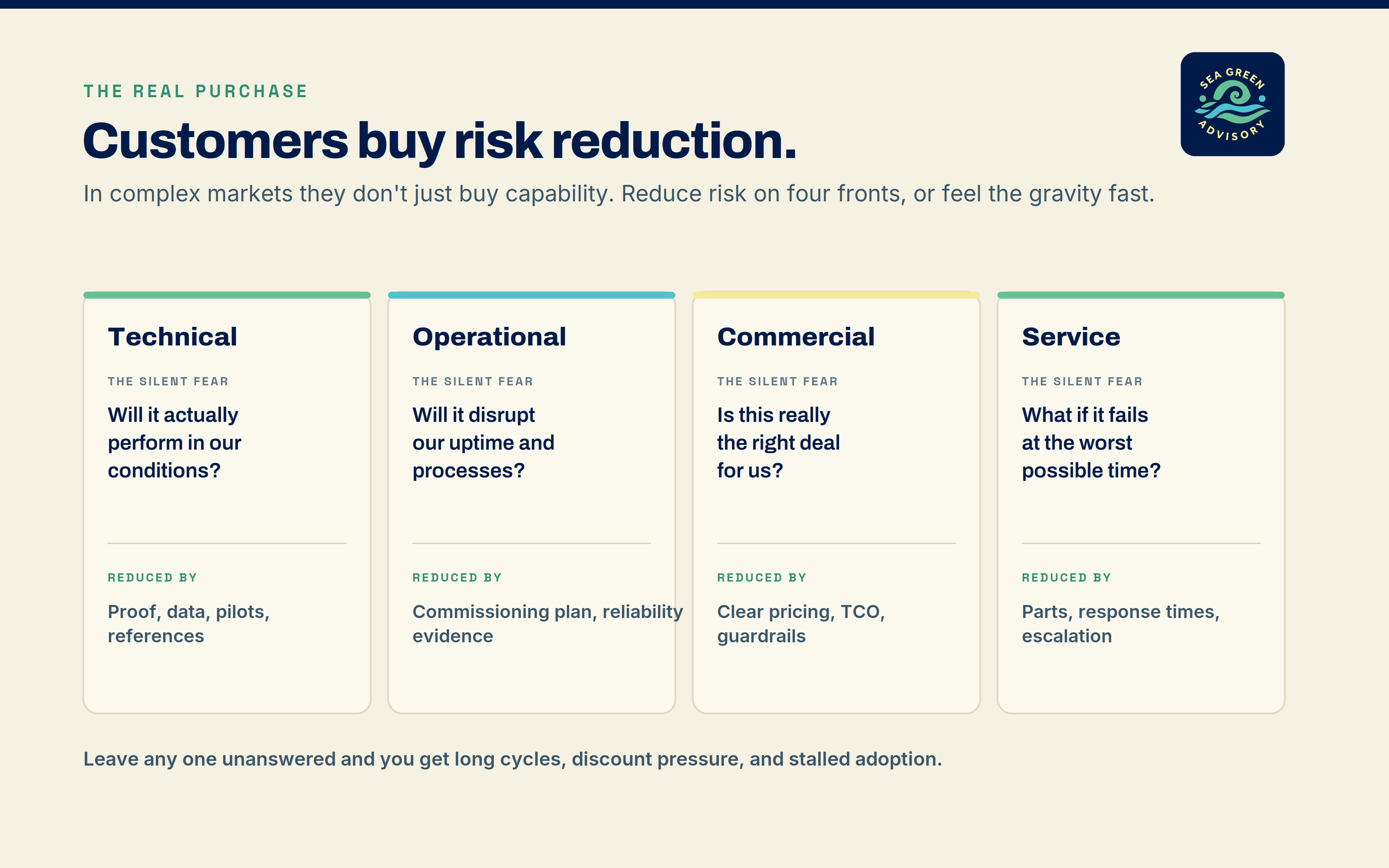
In complex markets, customers don’t just buy capability. They buy risk reduction.
If your go-to-market plan doesn’t reduce perceived risk — technically, operationally, commercially, and service-wise — you’ll feel the gravity fast: long sales cycles, discount pressure, “nice product but…” feedback, and stalled adoption after the first deal.
This blueprint is designed to keep things practical. No hype. No theory for theory’s sake. Just a clear model you can run with.
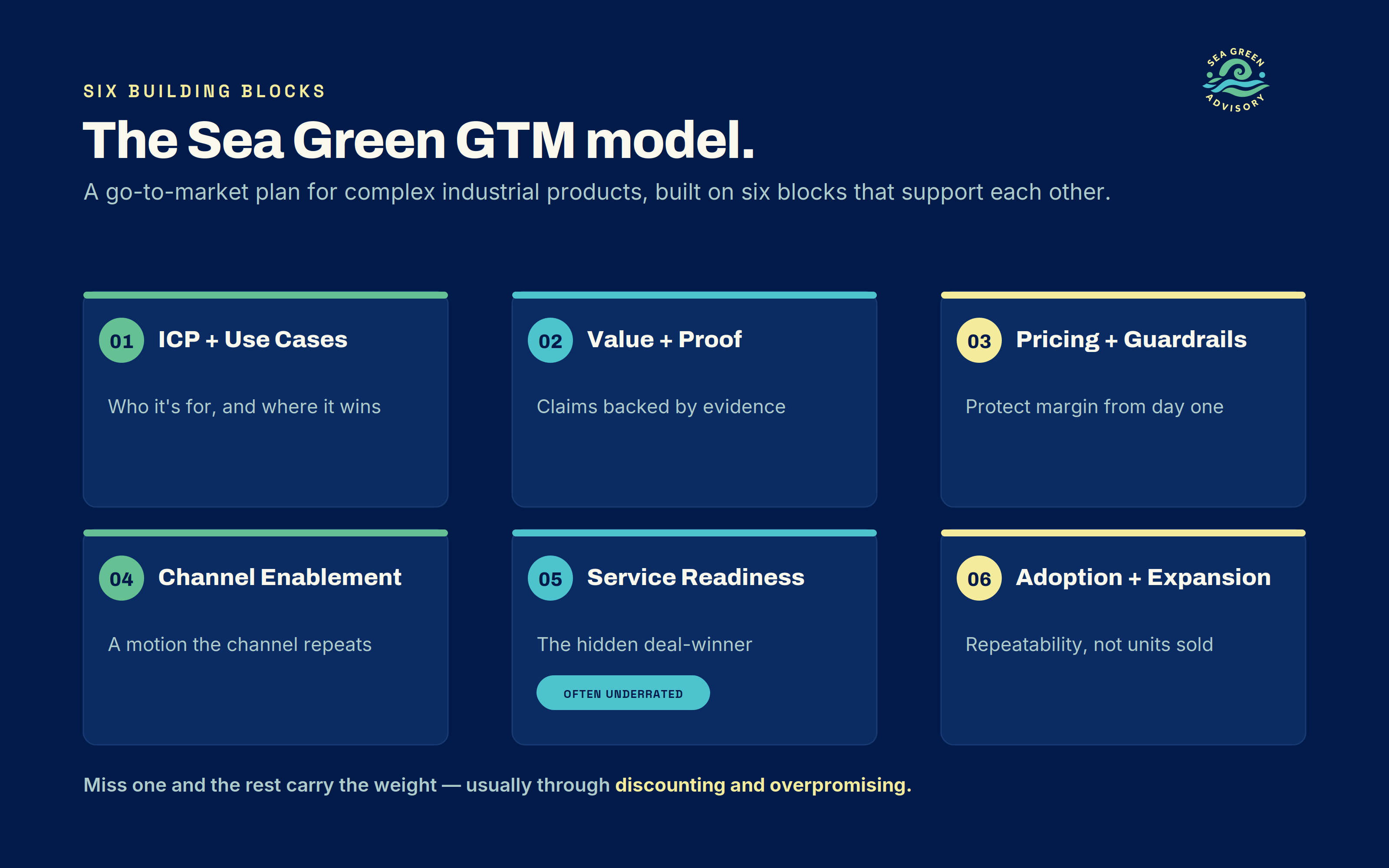
A strong go-to-market plan for complex industrial products is built on six building blocks:
Miss one, and the rest start carrying the weight — usually through discounting, overpromising, and operational stress.
Start with buyer reality, not market category.
In industrial markets, buying decisions are typically shared across Operations, Maintenance, Procurement, Finance, and sometimes Safety/Compliance. Your GTM must align to the “jobs-to-be-done” across that group.
A practical ICP definition should include:
Tip: Keep your use cases tight. Three is usually enough.
Each use case should read like:
If your pipeline is full of “maybes,” this is the missing discipline.
Industrial markets are full of claims. Buyers are trained to be sceptical.
Build a message stack that moves from outcome to proof:
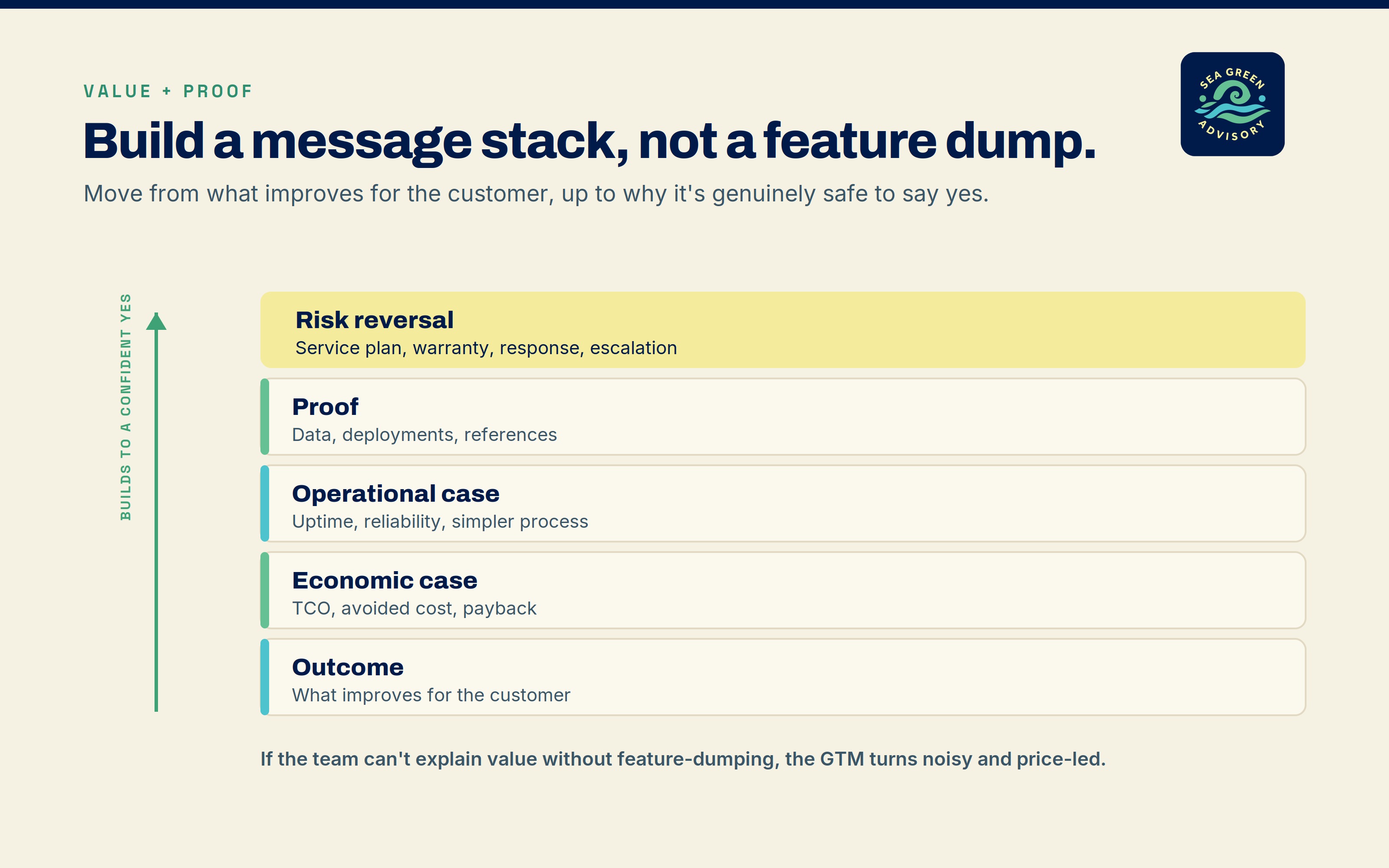
If your team can’t explain value without “feature dumping,” your GTM will be noisy and price-led.
Complex products often die in the discount swamp — not because customers are unreasonable, but because the seller doesn’t have guardrails.
Before launch, define:
The goal is simple: make the “right deal” the easy deal.
If you rely on discounting to win early deals, you’ll train the market to wait for discounting later.
If you sell through dealers/distributors, your GTM success depends on whether the channel can repeat the motion confidently.
Enablement assets that get used (because they’re simple):
If your enablement is too long, it won’t be used. If it’s too vague, it won’t work.
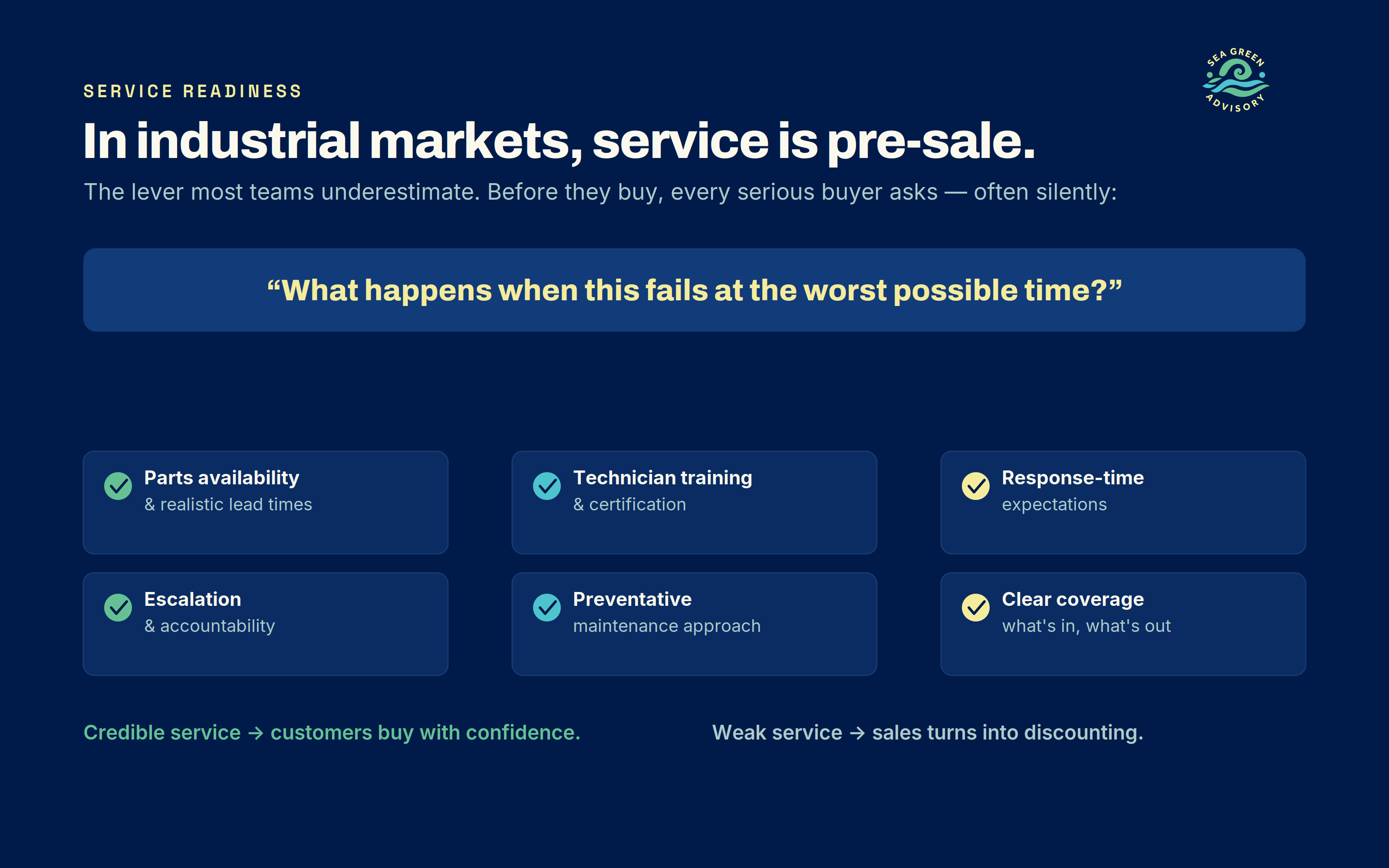
This is the lever most teams underestimate.
Buyers ask (often silently):
“What happens when this fails at the worst possible time?”
Service readiness is not a post-sale detail — it’s a pre-sale risk reducer.
Your GTM should clearly define:
When service is credible, customers buy with confidence. When it isn’t, sales turns into discounting.
Don’t measure launch success only by orders.
Measure the speed and reliability of adoption:
The objective is to turn your first wins into a repeatable rollout motion — not a one-off heroic effort.
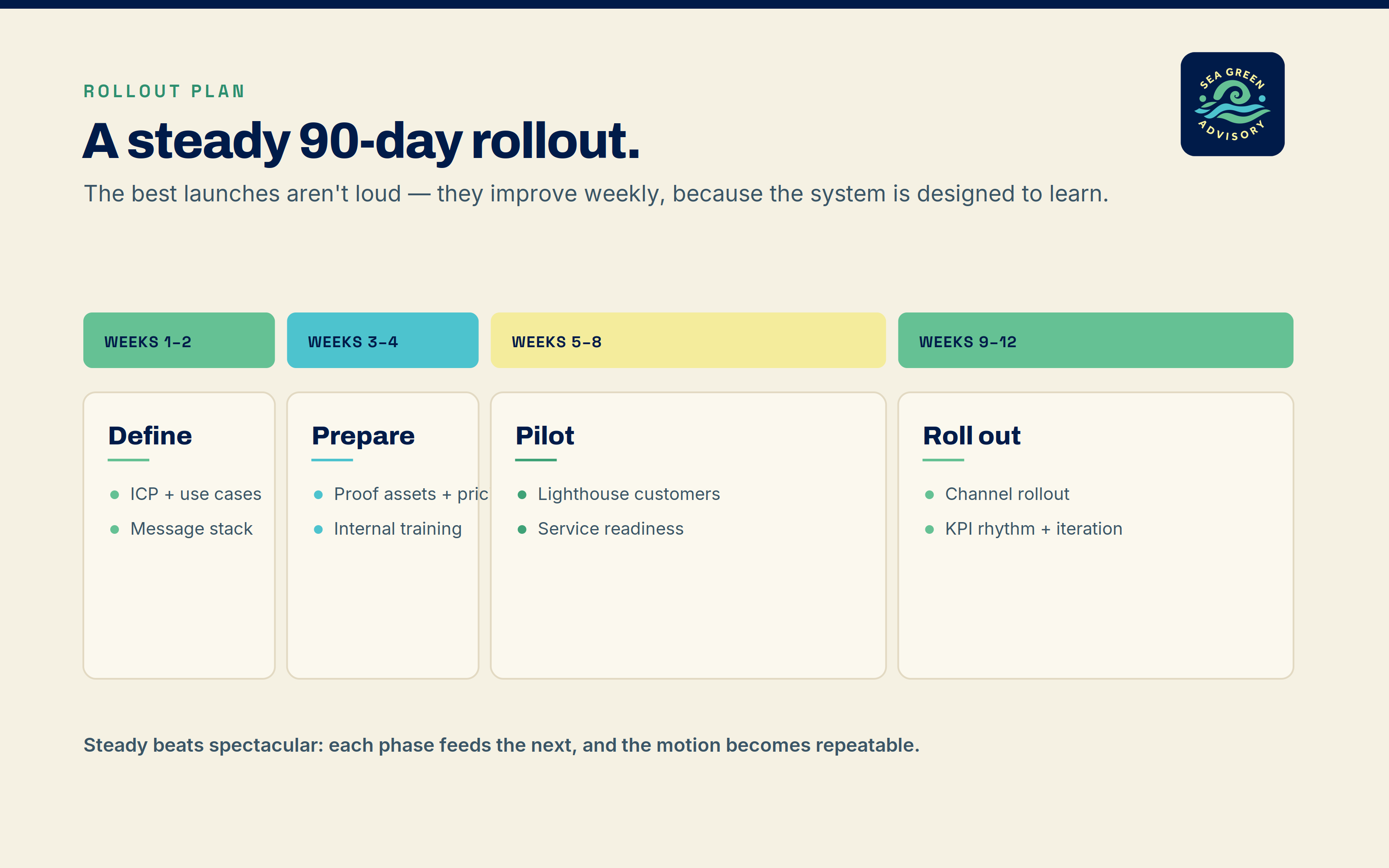
Weeks 1–2: ICP, use cases, message stack
Weeks 3–4: proof assets, pricing guardrails, internal training
Weeks 5–8: pilots / lighthouse customers + service readiness
Weeks 9–12: channel rollout + KPI rhythm + iteration
The best launches are steady. They improve weekly because the system is designed to learn.
If your product is strong but results are inconsistent, it’s rarely a motivation problem.
It’s almost always a go-to-market system problem: unclear fit, weak proof, poor handoffs, pricing chaos, or service risk left unanswered.
If you want a practical GTM rollout that protects margin, improves adoption, and aligns channel + service + sales, Sea Green Advisory can help you build the playbook and run the first 90 days with your team.
If you’d like to discuss your next launch (or fix a current one), reach out via Sea Green Advisory.
Book a zero obligation chat to see if we’re a good fit for success. We’re ready any time.
Have a chat