Large pipelines often create false confidence in industrial sales. Here’s a practical qualification framework to improve pipeline quality, forecasting, and conversion.


Smiling man wearing a checked shirt in an industrial or warehouse setting.
Glen Sharman
15th May 2026
10-12 mins

Pipeline Quality > Pipeline Size: A Qualification Framework for Complex Sales

In industrial and heavy commercial markets, sales teams are often measured by one highly visible number:

Pipeline value.

“How much pipeline do we have?”
“Are we at 3x coverage?”
“Did we add enough opportunities this quarter?”

At first glance, this makes sense. More pipeline should mean more future revenue.

But in practice, many organisations are running large pipelines full of:

  • inactive opportunities
  • weak qualification
  • inflated probability
  • low urgency
  • no real stakeholder alignment

The result?

  • forecasting becomes fiction
  • sales teams chase too much
  • discounting increases late in deals
  • management wastes time reviewing opportunities that will never close

And yet, the answer usually becomes:

“We need more leads.”

Often, you don’t.

You need a better filter.

Because in complex industrial sales, pipeline quality matters far more than pipeline size.

This article outlines a practical qualification framework designed specifically for heavy industry, equipment, transport, manufacturing, infrastructure, and industrial B2B environments—where long sales cycles, multiple stakeholders, and operational risk dominate buying behaviour.

The hidden cost of poor qualification

Weak qualification creates organisational drag.

Not just for sales teams—for the entire business.

Engineering gets pulled into speculative quotes.
Operations get dragged into unrealistic delivery discussions.
Leadership receives distorted forecasts.
Dealers and channel partners chase low-probability opportunities.
Marketing gets blamed for “bad leads.”

The issue is rarely effort.

It’s clarity.

A poor-quality pipeline creates the illusion of momentum while quietly consuming:

  • time
  • margin
  • credibility
  • attention

And eventually, it damages culture.

Because when teams continuously work on deals that never close, they lose confidence in both the process and the forecast.

The real purpose of qualification

Most qualification frameworks are treated like CRM administration:

  • budget?
  • authority?
  • timeline?

Tick the boxes and move the deal.

But qualification should do something far more important:

It should determine whether this opportunity deserves resources.

Not every enquiry deserves:

  • a detailed quote
  • a custom solution
  • engineering time
  • executive involvement
  • repeated follow-up

Strong qualification protects:

  • selling time
  • pricing discipline
  • operational capacity
  • strategic focus

In other words:
qualification is commercial resource allocation.

Why industrial sales are different

Industrial and heavy commercial sales are not transactional consumer purchases.

They involve:

  • operational risk
  • uptime concerns
  • multiple decision-makers
  • procurement processes
  • technical validation
  • capital scrutiny
  • service expectations
  • long replacement cycles

That means opportunities can look “active” for months while having very little real movement.

A buyer might:

  • request pricing
  • ask for specifications
  • attend demonstrations
  • engage in meetings

…but still have:

  • no urgency
  • no internal alignment
  • no approved budget
  • no appetite to change

Which is why activity alone is not qualification.

A practical qualification framework for complex sales

Instead of asking:

“Is this opportunity real?”

Ask:

“What evidence exists that this customer is moving toward a buying decision?”

This shifts qualification from opinion to observable behaviour.

The framework below focuses on six qualification pillars.
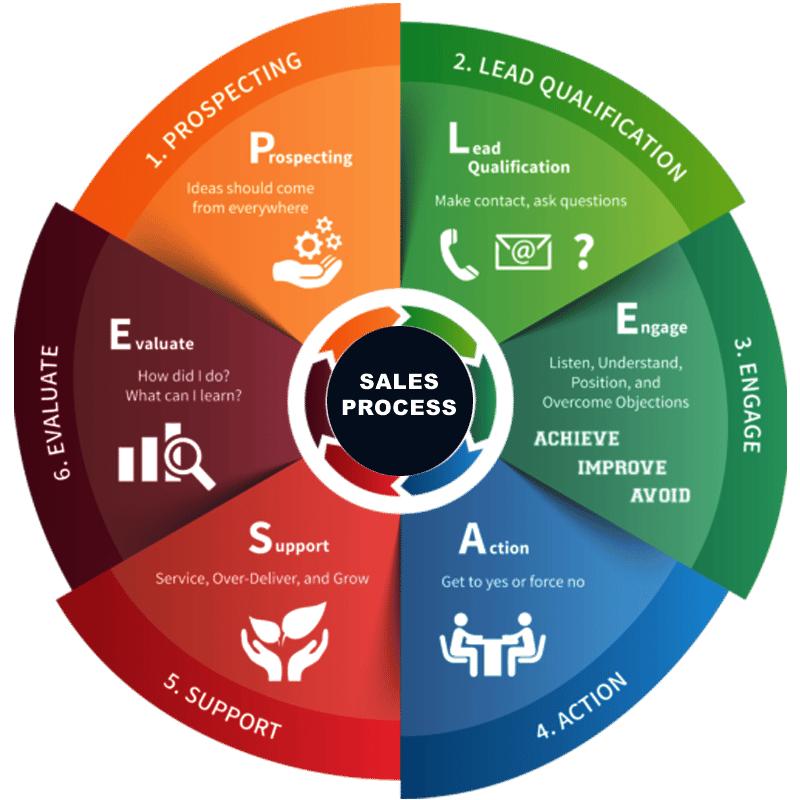
The 6 Pillars of Pipeline Quality

1. Problem Clarity

If the customer cannot clearly define the problem, the opportunity is weak.

Strong opportunities usually involve:

  • operational pain
  • inefficiency
  • downtime
  • cost pressure
  • compliance pressure
  • growth constraints

Qualification questions

  • What operational issue are they trying to solve?
  • What happens if nothing changes?
  • Is the pain measurable?
  • Who is affected internally?

Warning signs

  • vague interest
  • “just exploring”
  • no clear business impact
  • feature curiosity without operational need

Without pain, urgency rarely exists.

2. Stakeholder Alignment

Many industrial deals stall because only one stakeholder is engaged.

The site manager may love the solution.
Procurement may only care about price.
Finance may not yet support the spend.
Operations may fear implementation risk.

Strong qualification includes:

  • operational stakeholder engagement
  • commercial stakeholder visibility
  • procurement understanding
  • executive sponsorship where required

Practical rule

If only one person is engaged in a multi-stakeholder deal, qualification remains incomplete.

Warning signs

  • “I’ll take this internally”
  • repeated delays without broader meetings
  • inability to access decision-makers

In complex sales, access equals signal.

3. Commercial Viability

Not every technically suitable deal is commercially viable.

This is where many teams get trapped.

The opportunity may:

  • fit technically
  • align operationally
  • generate excitement

…but still fail commercially because:

  • margins are too thin
  • delivery complexity is excessive
  • competitive pressure is extreme
  • servicing requirements are unrealistic

Qualification questions

  • Can this deal be profitable?
  • Does it align with strategic priorities?
  • Is the pricing position defendable?
  • Are we chasing volume at the expense of margin?

Revenue without commercial discipline can quietly damage the business.

4. Timing & Urgency

Many pipelines are full of opportunities with undefined timing.

The customer may genuinely like the solution—but “sometime later” is not pipeline.

Strong timing indicators

  • replacement deadlines
  • operational expansion
  • contract renewals
  • regulatory changes
  • capital approval windows
  • fleet replacement cycles

Weak timing indicators

  • “maybe next year”
  • “just gathering information”
  • “keeping options open”

Practical rule

If no operational event is driving action, urgency is usually low.

5. Competitive Position

Sales teams often assume they are “in the running” simply because they are engaged.

That’s dangerous.

Strong qualification requires understanding:

  • incumbent relationships
  • switching barriers
  • competitor strengths
  • political dynamics
  • pricing expectations

Qualification questions

  • Why are they considering change?
  • What dissatisfaction exists with the current supplier?
  • Who currently owns the relationship?
  • What risk does the buyer perceive in switching?

If there is no clear reason to change, the incumbent usually wins.

6. Next-Step Commitment

One of the strongest qualification indicators is simple:

Does the customer commit to a clear next step?

Real opportunities progress.

Weak opportunities drift.

Strong signals

  • site visits booked
  • stakeholder workshops scheduled
  • operational data shared
  • trial planning agreed
  • commercial review meetings confirmed

Weak signals

  • “send me something”
  • “we’ll come back to you”
  • indefinite follow-up

Practical discipline

Every opportunity should end with:

  • a defined next action
  • an owner
  • a date

No next step = weak momentum.

The difference between activity and progression

One of the biggest pipeline mistakes is confusing:

  • meetings
  • emails
  • quotes
  • demos

…with actual progression.

A deal only progresses when customer commitment increases.

That commitment may include:

  • sharing internal data
  • involving more stakeholders
  • validating commercial models
  • allocating operational resources
  • agreeing implementation discussions

Without increasing commitment, the opportunity is usually stationary.

Why overgrown pipelines damage performance

Large, low-quality pipelines create predictable behaviours:

  • sales teams spread attention too thin
  • follow-up quality declines
  • forecasting accuracy collapses
  • discounting increases late-stage
  • management pressure intensifies

Ironically, oversized pipelines often reduce sales effectiveness.

Because when everything looks important, nothing receives enough focus.

The “fewer, better deals” principle

Top-performing industrial sales teams often manage:

  • fewer opportunities
  • with stronger qualification
  • deeper engagement
  • higher conversion rates

This creates:

  • better forecasting
  • healthier margins
  • more strategic account focus
  • reduced operational waste

Pipeline quality improves when teams become comfortable disqualifying weak opportunities early.

That requires leadership maturity.

Because many organisations still reward:

  • pipeline volume
  • CRM activity
  • quote count

…instead of actual progression quality.

A practical qualification scoring model

One effective approach is a simple weighted scoring system.

Example:

Qualification AreaScore (1–5)Problem clarityStakeholder accessCommercial viabilityTiming urgencyCompetitive positionNext-step commitment

Suggested interpretation

  • 24–30 = high-quality opportunity
  • 18–23 = workable but needs progression
  • below 18 = likely weak or premature

The goal is not bureaucracy.

The goal is consistency.

The leadership role in pipeline quality

Pipeline quality is not just a salesperson responsibility.

Leadership shapes behaviour through:

  • forecasting pressure
  • incentive structures
  • review cadence
  • qualification standards

If leadership rewards inflated pipelines, inflated pipelines will appear.

If leadership rewards:

  • progression quality
  • conversion
  • margin
  • strategic fit

…pipeline quality improves rapidly.

A better pipeline rhythm

Strong industrial sales organisations usually run a consistent review rhythm.

Weekly deal reviews

Focus:

  • movement
  • blockers
  • next actions
  • stakeholder gaps

Not:

  • “How confident are you?”

Monthly pipeline reviews

Focus:

  • qualification quality
  • stage ageing
  • conversion trends
  • pipeline concentration risk

Quarterly commercial review

Focus:

  • segment quality
  • win/loss themes
  • pricing discipline
  • strategic account penetration

Pipeline quality compounds when rhythm becomes consistent.

What great qualification feels like

When qualification improves:

  • forecasts become calmer
  • sales teams focus better
  • engineering time is protected
  • margins improve
  • conversion rates lift
  • management discussions become more strategic

Most importantly:
the organisation stops mistaking motion for progress.

At Sea Green Advisory, we help industrial businesses improve commercial clarity across:

  • pipeline qualification
  • sales process design
  • dealer and distributor execution
  • pricing discipline
  • forecasting rhythm
  • account prioritisation

If your pipeline feels large but unpredictable, the issue may not be demand—it may be qualification quality.

We help organisations build practical sales operating rhythms that improve conversion, forecasting confidence, and commercial focus.

Connect via seagreenadvisory.com to build a stronger pipeline system for complex industrial sales.

Share this post
Smiling man wearing a checked shirt in an industrial or warehouse setting.
Glen Sharman
Founder of Sea Green Advisory
Back to Blog Library

Heading 1

Heading 2

Heading 3

Heading 4

Heading 5
Heading 6

Lorem ipsum dolor sit amet, consectetur adipiscing elit, sed do eiusmod tempor incididunt ut labore et dolore magna aliqua. Ut enim ad minim veniam, quis nostrud exercitation ullamco laboris nisi ut aliquip ex ea commodo consequat. Duis aute irure dolor in reprehenderit in voluptate velit esse cillum dolore eu fugiat nulla pariatur.

Block quote

Ordered list

  1. Item 1
  2. Item 2
  3. Item 3

Unordered list

  • Item A
  • Item B
  • Item C

Text link

Bold text

Emphasis

Superscript

Subscript

Ready to chat strategy?

Book a zero obligation chat to see if we’re a good fit for success. We’re ready any time.

Have a chat

White semi truck driving on a highway at sunset with blurred motion and colorful sky.